Tuesday, January 13, 2015

Xclaim Xi-3

IecvNGm6phjHhMy

Enterprise and carrier WiFi have a few, established players with a shopping list of features that are useful;

  • Wireless mesh (don’t need all AP’s wired to each other)
    • Resiliency / self-healing if one or more break and the network re-routes
  • Multiple AP’s presenting a single SSID
    • Roaming between AP’s with no disruption to connectivity
    • Low inter-AP handover latency
  • Service profile / SLA’s per application
  • Rate-limiting (overall, and per application)
  • Usage stats / graphs
  • Multiple SSID’s
  • High-speed / throughput and support for the less congested 5GHz band (either 802.11a, 802.11n or 802.11ac)


Offerings for home use were pretty limited, and consisted primarily of features that were quite unnecessary (SPI firewalls, port forwarding, etc), or plain didn’t work properly (who reading this has ever managed to get a WDS network going between the same manufacturer, never mind a mix of them or generational differences).


Meraki promised some of this at a lower price-point pre acquisition, but Cisco in typical fashion has completely screwed up this SME and/or consumer-orientated acquisition; their price points alone make them a non-contender for anything other than an enterprise (which makes you wonder why they bought them if they’re not busy integrating their controller-less architecture into their incumbent line).


Modern homes need much of the above; the only thing that really radically differs is the number of AP’s. The average home needs less than 5 (note, I said home not ranch); the average enterprise I’d argue needs significantly more. Until recently, I could only wholeheartedly recommend the Open-Mesh range of products because they meet all of the above requirements, and their new software updates bring some truly incredible features to an AP range that is still less than $100 an AP. Facebook social WiFi integration, per application bandwidth reporting across SSID’s and a newly enhanced mobile app make the Open-Mesh ecosystem truly compelling, and hard to beat.


Enter Ruckus Wireless’ attempt, the Xclaim range. A new name and brand, and positioned differently, Xclaim attempts to give customers looking for a solution from a RF-credible provider a lower price-point for some of those features. I ordered 4 of the Xi-3 units, and have also played with a Xi-2 unit (provided by Xclaim); the units differ on their support for 802.11ac. Of the features outlined above, these AP’s do not mesh.


Ruckus is a company I admire; they have great people, their products are liked by serious WiFi deployers for their performance, throughput and manageability and they’re significantly more responsive to their customers and channel. This is the type of vendor I like. But, I’m afraid with the Xclaim range, they released about 6 months too early.


One of the selling points of the Xclaim products is that you configure the AP’s via an iOS or Android app. The app itself, on initial usage, is easy to use and beautiful. And the graphs / usage stats that appear are very pretty and useful for a home or SME. But once you close the app, the wheels fall off the bus. If you launch the app again, the graphs don’t appear (if you can even connect to the AP). If you want to add an AP, its a hit/miss affair. The network settings are tied to that app installation. If you can’t connect to the AP, or you want to add another AP, you have to remove the app from your device, reset the AP, and reconfigure the network (from scratch).


If you want to deploy in another environment / location, you have to remove the app, reinstall it and go again. And if you want to manage your initial / other site ? Reinstall the app, reset the AP(s), rinse, repeat. Another site ? Rinse, repeat. This is a massive fail.


No matter how good the RF performance of these units is (and by all my testing over the last month, it is truly impressive), managing them is a complete nightmare for a single site with a single AP. And for multiple sites and/or multiple AP’s, its completely unusable. Pity. I’m hoping they put the right resources behind this product line and fix it up; right now, its not something I could recommend.

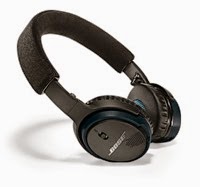
Bose Soundlink on-ear wireless headphones

Soundlink oe headphones bl lg

I’m a fan of Bose products; and having been a happy QC3 owner, I was quite keen to get a slightly cheaper, wireless version. Enter the Soundlink Bluetooth headphones.


Once again, Bose has gotten it right. The headphones use a human-friendly concept of talking you through the Bluetooth-pairing process (something I first experienced with Plantronics headsets).


Audio quality is typical Bose-fair; balanced, good mid-range, possibly a little muddy bass, but overall very pleasant for daily use. Volume levels are lower than I’d like, but probably safer. Battery life is outstanding; I’ve not gotten them below 40% even in all-day use. When the battery does die (apparently it does), you can use the included cord to still use the headphones - very smart and something I wish the QC3’s did.

Better sound unplugged

They come with a carry-case (very useful) and seem quite durable. I’m not convinced on how the headphone foam squishes when in the carry case, but I suppose thats what a manufacturers warranty is for.


Get a pair - that way, you too could be as cool as this stock-image hipster.

Bottom image

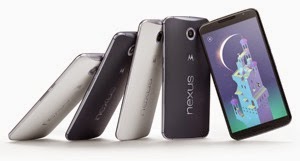
Nexus 6

It was logical when Motorola was bought by Google that they would be heavily influenced (both entities) by design, and the pinnacle of that would be in the Nexus line. Rumors of the Nexus line being replaced seem to be on hold for now; we don’t see anything other than Nexus devices, and maybe Sudar Pichai is a bit busy and doesn’t have time to review this just yet.


It is indeed a pity that Googlerola as a corporate entity seems short-lived, as Motorola were then re-sold (to Lenovo), but the reasons seem fairly sound.


But enter the king and the fruits of this (brief) affair - the Nexus 6.


N6 moreeverything 1600

Google tends to use the Nexus line as a platform to explore their new ideas, and the overriding idea here seems to be expansive real estate. This device is big.


Its very well made; battery life seems decent for a screen this size, and its a pleasure to hold in the hand. Lollipop is a great update, and Material design is actually quite pleasing to the eye. I can say that the gap between iOS and Android is narrowing incredibly quickly. The differences between the two are starting to distill into how flexible, and crucially, predictable you want the experience to be. Android, as you’d expect, is like a teenager wanting to be flexible, free and able to change their look as they see fit, while iOS feels more like a 33 year old hipster trying to stay cool.


Both have their place, and I haven’t yet decided which of the two I prefer more. Thats why, as I have done for the last 5 years or so, I’ll carry both. And if you’re wondering which platform to have in your car, have both - buy a head unit from Parrot.

Monday, November 10, 2014

How to treat people who pay you

I like Google Apps; in principle and execution, it gets the basics right - well. But there are four simple questions I’d love a human being to answer, and good luck trying to get any human being at Google to read your mail.


<WARNING : RANT APPROACHING>

(HINT Googlers’ : the reason you suck in selling to Enterprise isn’t because your products are technically bad, its because you can’t get hold of a human being because you make it too damn difficult to do so in spite of the fact that I’m goddamn paying you more than a bunch of douchey teenagers creating burner GMail accounts. And when I do eventually get through your convoluted PIN-based process to speak to a human, the line quality is so bad because you’ve outsourced it to some BPO with shitty VoIP that I simply give up)

</WARNING : RANT APPROACHING>


Those four questions are;

  1. Why don’t you offer a managed DNS service to Apps customers, in spite of the fact that you have Google DNS product which is only available via a python API ? Holy <insert favorite religious incantation here> guys, come on - you’re not going to appeal to any SME / SMB if you don’t offer DNS hosting easily
  2. Why when I’m able to migrate my Google+ profile from my private GMail account to my Apps account, can I not also migrate my custom URL ? Because holy salty balls (to misquote South Park), you can’t have your desired custom URL because hey, guess what, your old profile has it. Also, thanks for making it REAL easy to migrate, and thanks SO much for making the instructions so easy and intuitive. Here’s the goddamn link, because its not easy to find.
  3. Why when you’re adding such cool and usable features to Google+ like Stories do you exclude paying Apps customers from sharing the content from their Drive folders ? Great way to ramp up adoption to the Apps-based environment if the free one has more features. Wait a minute, have you become brain dead and hired some Microsoft or Oracle people because you think they understand the Enterprise business ? Thats like getting the Catholic Church (Congrats to the new Pope BTW; he seems seriously awesome) to branch out into day care centers. Microsoft and Oracle people are the only people on this earth who would be able to charge you for an inferior product when the free one has more features and is, oh wait for it, free ?
  4. You launch cool products and services that, wait for it, aren’t usable by your paying customers. What a great way to garner support.

Thursday, October 16, 2014

My journey to the public cloud

In spite of having architected, built and managed some of the largest public cloud infrastructures in Africa, I have until very recently run a private cloud exposed to the Internet for my personal needs.


I have two FreeBSD-based servers (one in South Africa, one in Germany), which for at least 10 years ran a very consistent configuration;

 
I kept my personal data in Dropbox since its inception, and about 18 months ago moved to Google Drive because of the more compelling pricing model, the pay-per-month option and the ability to search my data. I use a combination of Crashplan to keep a redundant copy in the cloud, and BitTorrent Sync to keep local files available (certain hosts are primary of certain data sets). LogMeIn Pro does a good job of allowing me to remotely manage several computer hosts. I kept my phone contacts in the corporate Exchange cluster, because in spite of all the terrible software they write, Microsoft has done a damn good job of licensing ActiveSync and making it fail-proof,  idiot proof and the de facto standard on every mobile platform out there.
 
This configuration served my data and personal needs, several vanity domains and similar for several friends and family members for over a decade. The only aspect that changed was upgrades for security purposes and a move from US-based hosting to Germany-based hosting (for cost and privacy reasons).
 

These servers acted as primary and secondary name servers, primary and backup MX and geo-distributed you to the closest web server for my family photo collection. And until about 6 months ago, I played down the progress in public cloud offerings and was confident in my own abilities as an ex-sysadmin.


Then Heartbleed hit. And then my FreeBSD version was EOL’d. And I had hardware failures, which caused me to stay awake at night, away from my family and friends and ruined an otherwise decent overseas trip. And while the lure of 18 degrees in a data centre used to thrill me, it no longer does. As does the reputation-damaging spectre of being hacked.


I decided to change all of this.


Over a 3 week period, while I’ve kept the Crashplan / Google Drive / BitTorrent Sync configuration to keep my “personal” computing requirements sane, I’ve migrated this configuration to;


Along the way, I tried a mail migration tool called Car.bo (from Shuttlecloud), that did a great job on small mailboxes, but failed miserably on large ones (2-10 GB). And, they sneakily move you from a direct billing relationship with Google to a reseller model where they bill you and get commission from your business - not cool. I ended up using a mail migration tool called Yippiemove, that while expensive, certainly did end up moving users’ data.


I now have my phone contacts in Google Contacts, and am using a tool called Scrubly to clean it up, populating LinkedIn, Facebook and Twitter data into the contact stream and profile photos. iOS and Android devices use Google Sync (which is licensed ActiveSync) to replicate contact data, Google Drive is my data repo and I’ll be able to shut down my servers from active use by the end of the month.


In this scenario, on-boarding a new compute platform, tablet, phone or similar is a 2 minute exercise - and I have access to all my data.


Yes, this is costing me some money - but nowhere near the hosting costs I would have incurred if I wasn’t working for an ISP. You’re looking at $5 per user month for Google Apps, $30 annually for hosting 10 DNS zones, $60 annually for Zenfolio, $30 annually for the contact cleanup utility and I’m springing an additional $10 per month for 1Tb of storage. Crashplan is about $6 per month for unlimited storage and backup of 10 computers.


Ultimately, the headache of keeping these systems in sync / up to date and secure is now not my problem. For me, that’s money well spent.


PS. The biggest headache was merging my and my users’ Google accounts (Plus, Voice, Drive, Chrome Sync, etc) from being unmanaged consumer-level Google accounts to managed Google Apps accounts. This migration is still too damn hard.

Saturday, October 4, 2014

iPhone 6+ - and iOS 8.x

Living with the iphone 6 plus

Yes. I bought one. Yes, you look like a tool using it. And yes, its big. And yes, it does’t fit nicely in your pocket.


But wow, is that screen awesome to work with. Its ungainly big. But that screen is awesome. Did I mention its so big ? What isn’t obvious (or what someone with any degree of honesty will tell you) is that the silly thing is easy to drop. Its so large, and the edges so rounded, that it can (literally) just slide out of your hand. Which I suspect is more than slightly intentional, because how else do you force people to upgrade quickly.


I have seen all the #bendgate comments; if you’re going to take an $850 phone and try and bend it, you’re an idiot who deserves a bent phone. And who puts a phone in their back pocket, sits on it and still expects it to be straight ? Grow up people.  


I did have this funny orientation bug happen to me, but I suspect thats rather due to the rubbish QA that obviously went into iOS 8.


Its big. And as someone pointed out, awesome when you’re using it. But painful when you’re not. Below is the 5, 6 and 6+. Go big or go home.

Iphone5 630


PS. The best feature of this phone is the amazing battery life! I get about 2 full days worth - very impressive.

Q4 2014 review - reality

I had mentioned previously that I was quite excited about the new technology we were going to see in Q4 2014. While we’re not through Q4, enough has happened that its worth summarising things thus far.


  • The successors to the Moto X and G were released; other than bigger screens, very little else has changed. Understandable, but slightly underwhelming. The Moto360 broke out too, and its distinguishing feature is that its round, and needs to be charged every evening. Hmmm. Again, underwhelming. Am I the only one who doesn’t really get this smart watch category ?
  • The Nexus 6, which looks like its being made by Motorola, hasn’t broken cover yet - but its tipped to be even bigger. Yikes!
  • The new iPad’s haven’t broken ground, but the iPhone 6’s have, and all the rumours were basically correct. Bravo to Apple on the Apple Watch, rumours of which have been floating but no leaks until release date, which is very impressive. Not as impressive as the watch itself, IMHO. I don’t see the point. It will be the best of a pointless category.
  • We had the iOS 8 reboot; and boy oh boy, are we still rebooting. It feels like a series of Microsoft Windows updates. Unreliable, buggy and borked several peoples devices (at least, 8.0.1 did)
  • We’re still waiting for Intel to hurry up and release those Broadwell chips. Come on guys, lets hustle a bit. The buzz around the 14nm production process had better yield some damn good results in terms of battery life.


Overall, thoroughly underwhelming.