Showing posts with label Mobile. Show all posts

Tuesday, February 5, 2019

2018 iPad Pro

Ipadpro11 spacegray 2up us en screen 1Apple iPad’s are curious devices; they started out as novelties, became marginal productivity tools for content consumption and have been trying (unsuccessfully) as content creation devices.


The first generation iPad Pro’s attempted to do that with the Apple Pencil and keyboard folio, but it really felt like a hack / first gen product. The device was basically a bigger, more powerful iPad.


That can’t be said for the 2018 iPad Pro. Available in two sizes, the current generation iPad Pro’s are actually really useful devices, smashing content consumption requirements, and meeting most (but not all) content creation requirements.


The device is extremely powerful, seems to have enough memory/storage and seems to handle almost anything you throw at it without slowing down. Probably the most fundamental change to the device is the switch from lightning to USB-C. Not only does this bring the iPad Pro line in step with the MacBook Pro line (notebook and iPad), but it also sets the scene for an iPhone Pro. Whatever that may be.


Its a great device; highly recommended. And if you’re going to buy it, don’t bother with the smaller one. The bigger one has a significantly bigger screen than the standard iPad, but is only marginally bigger in carrying it around.


PS. The pencil is a gimmick. Don’t bother.

Monday, June 18, 2018

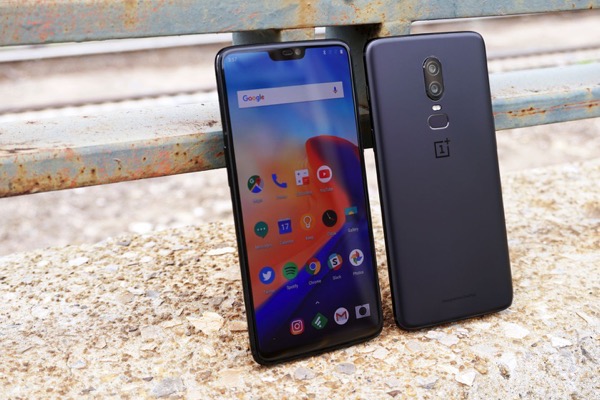
OnePlus 6

Https blueprint api production s3 amazonaws com uploads card image 777116 72154279 40b3 424b 81a8 b995c1c96fb8I’m a big fan of Android phones. I am currently the proud owner of a Samsung S9 and a Google Pixel XL2. Those have their pro’s and con’s;


S9


  • High-end specifications
  • Good camera
  • Dual SIM (the version I ordered)
  • Fiddly Touchwiz overlay
  • Awkward form-factor (long but not wide)
  • Great screen


Pixel XL2


  • Always first with updates
  • Super fast
  • No bloat ware
  • Pure Google Experience
  • Large form factor (big, nice form factor)
  • Iffy screen
  • No dual-SIM


I’ve heard a lot of buzz about OnePlus, as the flagship-killer quality and build. Having played with the OnePlus 6 now for two weeks, I can honestly say I’ve now found a non-OEM Android phone that I really like.


  • Great build quality
  • Super-fast!
  • Awesome screen
  • I love the mechanical mute / change ringer state slider button
  • Dual-SIM!
  • Pure Android experience
    • Almost anaemic in the lack of apps and software pre-installed on it

So far, loving it! Great device.

Wednesday, December 27, 2017

Apple iPhone X - revolutionary ?

I don’t think Apple makes a great phone. I don’t think Apple makes a great smartphone. Apple does make a reasonable phone, and a reasonably good smartphone. The combination is good enough for most people, and easy enough that they’re willing to live within the constraints in order to get something that “mostly works”.

Today, Android users fall into three categories;
  1. They can’t afford an iPhone
  2. They have a philosophical hatred of Apple, a philosophical love of absolute customisability, have some specific technical requirement that dictates Android or some gradient in between
  3. They simply don’t know or care enough to make a decision of one platform over another

And for the most part, app developers have worked out that 1 and 2 exist, and so have solved the problem by building for 3. There isn’t an app that I use more than once a month that doesn’t exist in some shape or form on both platforms, with equal utility. I do occasionally (and hate the experience almost immediately) fire up Windows phone to see what that is doing, and on that platform you realise how close Android and iOS are in reality in terms of usable applications.

The iPhone X is a rather revolutionary take (as far as Apple goes) on design and UI; none of the reasons people don’t like Apple are eradicated. Those users who had decided / chosen Android actively over Apple won’t buy an X. But those users who simply don’t care, and can afford it, might and probably will. Is it revolutionary ? For Apple, yes. For the industry, not really.

Its physically well sized, sitting comfortably between what we today consider compact and large. This is the "large phone" from 5 years ago. The FaceID system actually works very well, and you get used to the gesture-based system replacing the missing home button.

I am really enjoying mine.

Google Pixel XL2 - evolutionary


I really liked the very natural shift from the Nexus line to the Google Pixel range. I really liked the Google Pixel XL, and thought it would be a hard act to follow up.

But Google had to as the annual relentless march of the device treadmill continues, and the Google Pixel XL2, despite the almost non-existent lack of changes in the physical appearance, have managed to do something that feels evolutionary and natural as a successor. The screen seems more natural to the eye, although that seems to have been rather controversial.

Its faster, the screen is better, the battery life seems longer, and there are just overall some nice software changes. The always-on nature of the screen is pretty awesome. The squeeze-to-summon Google Assistant is gimmicky, good for a single-show party trick. I admittedly haven’t used the camera much, being one of the highlights of the phone. Overall, a good device. Good enough to change from a Pixel XL ? Nope.

2017 Tech updates

Its been a while since I posted updates. I'm going to post in short form what changed / what I played with as an update.
  • I was debating changing my MacBook 12" for a 13" Pro with Touch bar. I did. It was not transformative. The Touch Bar, while cool, is a gimmick. You don't actually use it that much. About the only thing that is useful is the TouchID fingerprint scanner, which I do use often. The is useful. Other than that, the notebook resolved my main gripes with the 12", namely speed/grunt, and ports. The new Pro has plenty of both.


  • I upgraded my Bose QC3's to QC35's. If the QC3's were good, the QC35's are simply sublime. And I don't experience the bass issues that seem to be widely discussed. Good battery life, extremely comfortable; my absolute go-to on flights and when I want uninterrupted listening. I did contemplate the Sony equivalents, but the Bose just seemed to have better build quality and class sound. Boo to the disparagers!
  • I ended up buying a single discreet Bluetooth headset, for ad-hoc listening. The Rowkin Mini Plus headphone is absolutely discreet, well built and a good purchase for the price. Solves a gap for that "something to do while my kids/wife are busy and I have 5 minutes to kill"
  • A massive win in terms of WiFi gear that I've been playing with is GL-Inet. Its like a Swiss-army knife of AP's. It can be a bridge, repeater, router, AP, OpenVPN client-termination device, can use a phone as a modem and solves the hotel "captive portal" / multiple device problem. A definite winner!
I’ve played with a lot of gear, devices and software. Nothing so impressive as to merit a review.

Wednesday, January 4, 2017

Apple iPhone 7+

I've been using an Apple iOS device as my daily driver phone for quite a while now. Initially, I felt quite limited doing so because Apple seemed to be so far behind on the customization and flexibility, but the app developers make it compelling because initially they tend to release first on Apple, if not exclusively.

In my last related post, I had a iPhone 6+. Like a lemming, I upgraded to the 6S+. The touted difference was the ability to push harder or softer on the screen to achieve a myriad of different actions based on how hard you pushed; not features I really use frankly, and I didn't really notice much of a difference other than the thing now being a lot heavier.

Like a faithful lemming, I've upgraded to the 7+. It does have a bunch of differences (color, faster, etc), but the two key ones for me (and the reasons its worth getting frankly) are;


  • Its waterproof - I'm not a surfer, but knowing that I can get the thing wet and not stress / lose data is a big deal
  • The second camera being used to create portraits with good bokeh and/or being able to zoom in quite closely is very useful on a daily basis

If you're debating getting one, don't debate too long. Apple has clearly reached the point where massive steps in innovation are not present. But, the incremental ones are not bad if you skip generations (i.e. buy, skip the next one, buy, skip the next one, buy)

Thursday, October 15, 2015

Open-Mesh MR900 & OM5P

Largebanner an

I like Open-Mesh’s equipment, and software update cycles (I have written about them before). The hardware is reasonably priced, the solution set keeps moving forward and for a small (relatively) deployment, the management dashboard is flexible, rich and frankly blows most enterprise solutions out the water with ease of management and access to information.


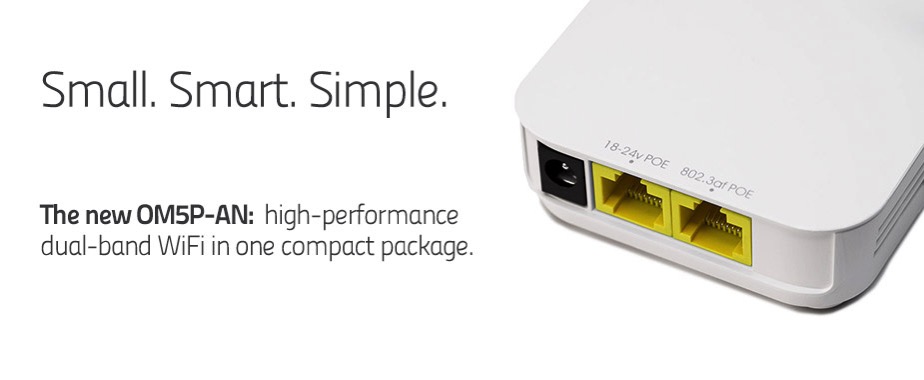
The OM5P is a 5GHz-only device, which I won’t discuss because its been deprecated by the OM5P-AN. Thanks for releasing this; I managed to buy 3 in the short window when it was available, and it was a poor performer. Not a good purchase at all.


The MR900 on the other hand is a pretty awesome device. 802.11n in 2.4 and 5GHz, in a single device, and fairly priced. Robust, good radio performance, and pretty easy to setup/maintain. It too had been replaced by the MR1750, essentially an ac device in 2.4 and 5GHz. I have a few on back-order, so look forward to testing that.


But, Open-Mesh solves a problem and its cloud controller Cloudtrax solve a pretty simple set of problems;


  1. Relatively cheap AP’s, that work relatively well from a radio/RF perspective
  2. AP’s can be wired or meshed, and require no configuration to configure them in either mode
  3. A web-based management console, that provides sufficient control but simplistically
  4. The ability to run 4 SSID’s, inter-mixing rate limiting, client isolation and ability to not bridge to the LAN solve the networking issues
  5. The ability to run mixed authentication modes, external RADIUS and captive portal, PayPal and Facebook integration and flexible deployment modes
  6. Pre-built rich protocol-level, client-level and SSID-level traffic graphs that require zero configuration


I can highly recommend Open-Mesh.

Tuesday, January 13, 2015

Long term iPhone 6+ thoughts

I wrote about the iPhone 6+ earlier in the year; at the time, I wasn’t sure if I would like the device and would I actually return it because it was too big.


I’ve now been using the device basically since its launch, and have travelled a reasonable amount with it (South Africa, Dubai, US). In short, I think this is the best iOS phone experience you can have right now. I did try an iPhone 6 for a while, but it felt very much like an incremental upgrade to the 5S, as opposed to the 5S - 6+ upgrade.


If you’re considering it, go get one! You won’t be disappointed. If you’re looking for an Android device, right now I’m a huge fan of the Motorola line (I’ve used the 1st gen X and G). But I only hear good things about the Z3 line from Sony.

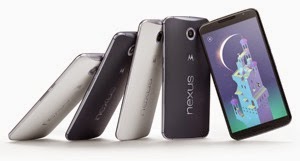
Nexus 6

It was logical when Motorola was bought by Google that they would be heavily influenced (both entities) by design, and the pinnacle of that would be in the Nexus line. Rumors of the Nexus line being replaced seem to be on hold for now; we don’t see anything other than Nexus devices, and maybe Sudar Pichai is a bit busy and doesn’t have time to review this just yet.


It is indeed a pity that Googlerola as a corporate entity seems short-lived, as Motorola were then re-sold (to Lenovo), but the reasons seem fairly sound.


But enter the king and the fruits of this (brief) affair - the Nexus 6.


N6 moreeverything 1600

Google tends to use the Nexus line as a platform to explore their new ideas, and the overriding idea here seems to be expansive real estate. This device is big.


Its very well made; battery life seems decent for a screen this size, and its a pleasure to hold in the hand. Lollipop is a great update, and Material design is actually quite pleasing to the eye. I can say that the gap between iOS and Android is narrowing incredibly quickly. The differences between the two are starting to distill into how flexible, and crucially, predictable you want the experience to be. Android, as you’d expect, is like a teenager wanting to be flexible, free and able to change their look as they see fit, while iOS feels more like a 33 year old hipster trying to stay cool.


Both have their place, and I haven’t yet decided which of the two I prefer more. Thats why, as I have done for the last 5 years or so, I’ll carry both. And if you’re wondering which platform to have in your car, have both - buy a head unit from Parrot.

Thursday, October 16, 2014

My journey to the public cloud

In spite of having architected, built and managed some of the largest public cloud infrastructures in Africa, I have until very recently run a private cloud exposed to the Internet for my personal needs.


I have two FreeBSD-based servers (one in South Africa, one in Germany), which for at least 10 years ran a very consistent configuration;

 
I kept my personal data in Dropbox since its inception, and about 18 months ago moved to Google Drive because of the more compelling pricing model, the pay-per-month option and the ability to search my data. I use a combination of Crashplan to keep a redundant copy in the cloud, and BitTorrent Sync to keep local files available (certain hosts are primary of certain data sets). LogMeIn Pro does a good job of allowing me to remotely manage several computer hosts. I kept my phone contacts in the corporate Exchange cluster, because in spite of all the terrible software they write, Microsoft has done a damn good job of licensing ActiveSync and making it fail-proof,  idiot proof and the de facto standard on every mobile platform out there.
 
This configuration served my data and personal needs, several vanity domains and similar for several friends and family members for over a decade. The only aspect that changed was upgrades for security purposes and a move from US-based hosting to Germany-based hosting (for cost and privacy reasons).
 

These servers acted as primary and secondary name servers, primary and backup MX and geo-distributed you to the closest web server for my family photo collection. And until about 6 months ago, I played down the progress in public cloud offerings and was confident in my own abilities as an ex-sysadmin.


Then Heartbleed hit. And then my FreeBSD version was EOL’d. And I had hardware failures, which caused me to stay awake at night, away from my family and friends and ruined an otherwise decent overseas trip. And while the lure of 18 degrees in a data centre used to thrill me, it no longer does. As does the reputation-damaging spectre of being hacked.


I decided to change all of this.


Over a 3 week period, while I’ve kept the Crashplan / Google Drive / BitTorrent Sync configuration to keep my “personal” computing requirements sane, I’ve migrated this configuration to;


Along the way, I tried a mail migration tool called Car.bo (from Shuttlecloud), that did a great job on small mailboxes, but failed miserably on large ones (2-10 GB). And, they sneakily move you from a direct billing relationship with Google to a reseller model where they bill you and get commission from your business - not cool. I ended up using a mail migration tool called Yippiemove, that while expensive, certainly did end up moving users’ data.


I now have my phone contacts in Google Contacts, and am using a tool called Scrubly to clean it up, populating LinkedIn, Facebook and Twitter data into the contact stream and profile photos. iOS and Android devices use Google Sync (which is licensed ActiveSync) to replicate contact data, Google Drive is my data repo and I’ll be able to shut down my servers from active use by the end of the month.


In this scenario, on-boarding a new compute platform, tablet, phone or similar is a 2 minute exercise - and I have access to all my data.


Yes, this is costing me some money - but nowhere near the hosting costs I would have incurred if I wasn’t working for an ISP. You’re looking at $5 per user month for Google Apps, $30 annually for hosting 10 DNS zones, $60 annually for Zenfolio, $30 annually for the contact cleanup utility and I’m springing an additional $10 per month for 1Tb of storage. Crashplan is about $6 per month for unlimited storage and backup of 10 computers.


Ultimately, the headache of keeping these systems in sync / up to date and secure is now not my problem. For me, that’s money well spent.


PS. The biggest headache was merging my and my users’ Google accounts (Plus, Voice, Drive, Chrome Sync, etc) from being unmanaged consumer-level Google accounts to managed Google Apps accounts. This migration is still too damn hard.

Saturday, October 4, 2014

iPhone 6+ - and iOS 8.x

Living with the iphone 6 plus

Yes. I bought one. Yes, you look like a tool using it. And yes, its big. And yes, it does’t fit nicely in your pocket.


But wow, is that screen awesome to work with. Its ungainly big. But that screen is awesome. Did I mention its so big ? What isn’t obvious (or what someone with any degree of honesty will tell you) is that the silly thing is easy to drop. Its so large, and the edges so rounded, that it can (literally) just slide out of your hand. Which I suspect is more than slightly intentional, because how else do you force people to upgrade quickly.


I have seen all the #bendgate comments; if you’re going to take an $850 phone and try and bend it, you’re an idiot who deserves a bent phone. And who puts a phone in their back pocket, sits on it and still expects it to be straight ? Grow up people.  


I did have this funny orientation bug happen to me, but I suspect thats rather due to the rubbish QA that obviously went into iOS 8.


Its big. And as someone pointed out, awesome when you’re using it. But painful when you’re not. Below is the 5, 6 and 6+. Go big or go home.

Iphone5 630


PS. The best feature of this phone is the amazing battery life! I get about 2 full days worth - very impressive.

Q4 2014 review - reality

I had mentioned previously that I was quite excited about the new technology we were going to see in Q4 2014. While we’re not through Q4, enough has happened that its worth summarising things thus far.


  • The successors to the Moto X and G were released; other than bigger screens, very little else has changed. Understandable, but slightly underwhelming. The Moto360 broke out too, and its distinguishing feature is that its round, and needs to be charged every evening. Hmmm. Again, underwhelming. Am I the only one who doesn’t really get this smart watch category ?
  • The Nexus 6, which looks like its being made by Motorola, hasn’t broken cover yet - but its tipped to be even bigger. Yikes!
  • The new iPad’s haven’t broken ground, but the iPhone 6’s have, and all the rumours were basically correct. Bravo to Apple on the Apple Watch, rumours of which have been floating but no leaks until release date, which is very impressive. Not as impressive as the watch itself, IMHO. I don’t see the point. It will be the best of a pointless category.
  • We had the iOS 8 reboot; and boy oh boy, are we still rebooting. It feels like a series of Microsoft Windows updates. Unreliable, buggy and borked several peoples devices (at least, 8.0.1 did)
  • We’re still waiting for Intel to hurry up and release those Broadwell chips. Come on guys, lets hustle a bit. The buzz around the 14nm production process had better yield some damn good results in terms of battery life.


Overall, thoroughly underwhelming.

Thursday, August 21, 2014

Q4 2014

The last quarter of 2014 (which we’re effectively heading into now) should be interesting from a technology perspective! Its weird, but you get the sense that manufacturers keep all their thunder for Q3/Q4 in order to capitalise on the Thanksgiving/December rush. I would have expected them to shift it earlier to let the market settle and allow smart buyers to plan (these things cumulatively are not cheap after all). But living in the US, I can now see that most of it is catering to the impulsive (and generally misinformed public), and no human impulse is quite so strong as the good feeling you get from perceived savings from a sale - even if its completely artificial. I am expecting to see;

  • a follow up to the Moto X and Moto G, both really solid handsets which seem to indicate to me, along with the Moto360 smart watch at least, that Motorola’s mobility division got its groove back (before Google decided to flog them off to Lenovo - lets hope this wasn’t a few hit wonder rush). I doubt I’ll order either (simply because there is nothing wrong with the ones I have), but if you’re looking for a solid Android device, these are pretty awesome; well priced, decent specs and solid build quality! Also relatively unmolested from the manufacturer
  • a Nexus 6 running the rebooted Android L. Loads of rumours, no facts. So not going to speculate
  • the iPad Air 2, the iPad Mini with Retina 2 and two versions of the iPhone. Again, too many rumours so not going to speculate. To be honest, Apple’s announcements have become pretty stale in this arena and frankly uninspiring. I’m not expecting this to change with this slew; faster, more RAM (maybe) and bigger. Not inspiring
  • an Apple Watch - for such a giant in the personal consumer electronics space to not have a wearable is insane; these rumours have been running for more than a year now, and given that all of their rivals have launched, the Cupertino behemoth would be insane to not deliver something to the market - but its going to have to be rather special for me to consider it (thats not to say it won’t sell millions; it will even if its garbage, because it’ll be the “best garbage you’ve ever seen”)
  • reboots of the OS X and iOS for computing and mobile devices respectively
  • Mass production of Broadwell-based Intel processors. Its time for a new notebook for me (run through the 3 year cycle), and its requiring all of my restraint to wait for the new processor architecture to hit Apple’s devices. Broadwell-based Retina 13” Pro, here we come. While I like the profile of an Air, it just simply does’t have the juice I would like, even though it only gets booted up when not at the office - and with the new architecture, it should comfortably whip the Air for battery life compared to what I’m using now
 
So overall, an exciting time!

Tuesday, June 10, 2014

Using Republic Wireless

Rw

I love the theory of using WiFi as a de facto bearer for voice telephony, with seamless integration and handover to a macro network. The promise of a voice telephony service that utilises WiFi locally, and cellular as a macro network service, is appealing; combined with seamless handover between the mediums and it sounds utopian. Costs should be lower, but more importantly, call quality and reliability should be higher; the carrier could offer SLA’s on calls made on a WiFi bearer, introduce features like HD voice and network core call recording relatively easily and make use of the ever increasing pool of latent capacity on networks, broadband or otherwise.


These sound like enterprise features. It sounds like this category is begging to be made. But until someone steps up to the challenge, we have to work with what is in-market right now; that is consumer-grade, and appeals to cost as the primary driver. And that is where Republic Wireless plays.


Its been hard to separate the three interwoven threads of the service; there is the Sprint-provided cellular service, the Moto G handset and the Republic Wireless MVNO service. Lets try though.


Moto G - This is an awesome device for its price point. The hardware is not the most top end, and it noticeably struggles if you push it even vaguely. The battery life is pretty decent (looks like I could get almost two days out of it), the screen is pretty good quality and overall it feels great in the hand. Other than those points, its a relatively new version of Android (4.4.2), and you can make it look, feel and behave exactly as you see fit.


Republic Wireless MVNO - The service experience of using Republic has been pretty awesome. I haven’t once resorted to phoning (good thing, because there is no number to phone), and the entire order and fulfilment process was carried out seamlessly, efficiently and electronically, including porting in a phone number from another carrier. I was kept constantly informed as per the order progress and status, as well as delivery. The user portal is mostly functional (giving you a list of in/out calls, and a bearer breakdown), but could do with some more functionality (like setting your forwards, being able to playback your voicemail, etc). It works though. I changed service plans from WiFi-only to WiFi and cellular in a matter of minutes through their pre-loaded application, a process that normally would require a phone call and three forms. Handover between WiFi and cellular is actually pretty good, and kudos to Republic for not loading the phone with tons of bloat. Its almost completely untouched.


Sprint - This is the least tested part of my experience thus far with Republic; but its also most evidently the annoying part. When on cellular, call setup times are long, call quality is not great, and successful call setup is average to poor. When using the phone this weekend, 2 out of 3 call setups in a mall failed. When the same recipient was called from another cellular service (AT&T) the call setup time was near instant (and they’re not on the same network) and all were successfully terminated / answered. I cannot comment on coverage, as I haven’t left San Francisco with it yet. Its not fair to comment on the data side of the service, as I chose the 3G service and not the fancy 4G service (rant : why do US carriers neglect or not bother with their 3G services and instead go full tilt with LTE deployment). Its also entirely possible that Republic chose a choked cellular data service to keep the price low. I therefore cannot comment on the data side.


From a costing perspective, this is available for easily half of T-Mobile’s rates, which themselves are, at minimum, 30% cheaper than “mainstream” options (AT&T and Verizon). If I was a consumer, and wanted cellular service, this would be a pretty easy de facto choice; save easily $50 per month, and support an exciting challenger (although it looks like the area is starting to hop up; check out FreedomPop). As a relatively heavy business user however, this doesn’t work as my primary option. Its let down by Sprint’s network. Pity.

Friday, June 6, 2014

Republic Wireless

IMG 2240

I had all but forgotten about Republic Wireless, until upcoming travel plans made me realise that I needed to be able to reliably make WiFi calls. So I hopped onto their web site and ordered their entry level phone, a Motorola G. Guess what arrived today :-)


More comments about the experience, service and device next week. Now its the fun of setting up a new Android device.

IMG 2241

Friday, June 7, 2013

The last HTC phone that anyone will care about

HTC ProductDetail overview

HTC was a credible, solid device manufacturer that not only made great hardware, but paired it with its customisations of Android that in past years made Android a credible option for business users rather than a geeks wet dream. But it feels like someone sucked out all the energy and dynamism out of HTC, and threw it into Samsung. Now don't get me wrong; Samsung, while they make great hardware, make some god awful UI's and add (in my mind) almost no tangible value to the Android ecosystem rather than numbers.


But you have to face reality; HTC is haemorrhaging its senior executive team, and despite announcing it before the Samsung S4, has delivered the HTC One it to market in most markets later (sometimes by days, but often by weeks) than its feared rival. So is this the last great phone HTC makes ? I hope not, but fear it is.


Onto the merits of the phone!


  • Its gorgeous to hold in your hand, and feels so well built and less plastic than its rival
  • Those stereo speakers are truly amazing - no more tinny noise, thanks to those Beats-inspired additions
  • HTC Sense 5 is truly a breath of fresh air, providing a great skin on top of Android


But I'm afraid its not all roses :-(


  • The battery life is miserable - try running out of juice (properly) by 4PM in a business day
  • The lack of a large Calendar widget is a dreadful omission, given that its been there in almost every prior device
  • The design gives the hint that its not life-proof compared to its rivals


I like it; enough to make it my primary ? Lets run the battery a bit longer and see. But if it continues to be miserable, no.

Nokia Lumia 920 (aka the peak of irrelevance)

920 nokia lumia pureview jpg

I tried a Nokia Lumia 920 this week. Its well built, solid (I could use it as a traditional weapon its so damn heavy), and the unit I played with was a deep red (and came with a luminous yellow inductive charging pad). Quite eye catching.


LIke the Blackberry Z10 I played with a while ago, the Windows Phone has some great features. Its super responsive, the graphics are gorgeous, and its quite quick to get going. But, it doesn't take long for the Microsoft-ism's to come shining through. All the built-in apps only integrate with Skydrive; sorry Google Drive and Dropbox users, you're stuck. And Google users, there's no social networking, search, browser, Earth or maps. There's nothing. Unlike the Blackberry, this platform has been around long enough that if those applications were ever going to make it over, they'd have been there by now. The fact that they're not, indicates that they probably won't ever be.

Nokia Lumia 920 Wireless charging


And thats sad, because this could have been a great contender.

Nokia Lumia 920 PureMotion HD


Emphasis on could have been. Adios, Nokia & Microsoft. It was, respectively, a great (Nokia) and fucking goddamn awful (Microsoft) 20 years in the mobile industry; by hitching the two horses together, they'll just drown faster.

Tuesday, May 21, 2013

Samsung ATIV SmartPC Pro 700T

CM S7 ATIV 1

Microsoft Windows 8 has had mixed reviews; from the positive to the negative and everything in between. There is no question that Microsoft has taken a large bet on the mobile form factor, and Windows 8 is the company's response to the IOS-led mobile computing revolution underway. Most reviews have been lukewarm, and customer adoption has not been as rapid as hoped.


Is this because the software / hardware doesn't work, or is the idea flawed ? Having several Apple devices, I can confidently say that while they're amazing personal and consumer tools, they vary between amusing to downright useless as corporate devices. Three simple things that you can't universally do on an iOS device are;

  1. Correctly view, edit and contribute to a multi-user / versioned document with tracked changes
  2. Consistently view, present and edit a presentation
  3. Export, import or share onto a memory stick any content


While these are simple (and you would think trivial) matters, in a business context they're effectively show stoppers. I bought and played with a Microsoft Surface RT (RT stands for ReTarded), which was silly. The hardware is great, the folding thin keyboard is truly innovative but the lack of an Intel processor makes the app and program ecosystem pretty thin. Enter the mouthful; the Samsung ATIV SmartPC Pro 700T (phew). A i5-based processor, 64GB SSD and built-in 3G modem makes this (large and heavy) tablet and associated keyboard cover quite an interesting beast. I've been using it for about a week now, and some initial thoughts;

  • Windows 8 isn't sure if it wants to be a tablet, or general purpose computing platform (Metro, desktop, and the confusion and lack of cohesion between the two)
  • Windows has a large and solid platform of software that allows you to do almost anything you need
  • USB ports are damn handy, as is an open and standardised set of file systems
  • 64GB is simply not enough storage; even with an additional 16GB MicroSD, disk space is so tight that you just barely make it
  • Windows 8 tablets and devices play nicely with corporate workflow, systems and architecture principles


Windows 8 (and this hardware) are not the prettiest, slickest, fastest or most appealing combo; a MacBook Air or an iPad 4 from a design, weight and general aesthetic perspective kick these offerings into the stratosphere. But as a business tool ? I haven't powered my iPad on since I got this. 


For me, even though I'm going to get ridiculed for it, the Windows 8 tablet is a compelling story.

Saturday, March 9, 2013

Open-Mesh

I've played with a load of WiFi access points; from my very first Zyxel 802.11b access point, with its dorky associated PCMCIA card, to the latest/greatest Apple base station, most AP's haven't really differentiated themselves. Off hand, I can think of Proxim, Cisco, Orinoco, Xirrus, Colubris, Ruckus, Linksys, Netgear, Billion, D-Link, TP-Link & Belkin to name a few brands I've had the (dis)pleasure of directly configuring.

 Only four stand out, for different reasons.

  • Proxim, for having the most awesome WiFi meshing, going back more than 8 years. Although you had to connect to each one to configure them, wired or wireless was irrelevant; they would discover each other and backhaul over 5GHz and serve clients over 2GHz, with a single unified SSID. They were almost perfect, except for the price, which was about R5k at the time
  • Linksys, for having the most long-range device, the WAG54G. Solid, dependable, boring as sin but rock solid and worked well in almost any environment
  • Billion, for unarguably having the most rubbish radios and range, and being so unreliable that they're as good as useless
  • Apple, for having the most expensive and least functional devices on the planet. Other than that you can configure them from an iOS device, there is absolutely nothing redeeming about these AP's. Repeat, there is nothing redeeming about Apple AP's as WiFi devices
So, being a schmuck, I ended up with two Apple Airport Extreme devices, both cabled/wired, with two radios; one broadcasting at 5GHz and the other at 2.4GHz. Nope, they didn't speak to each other if they were cabled. Nope, they didn't form/create one SSID. Yes, iOS devices are particularly stupid and want to associate with the BSSID they last connected, not necessarily the one closest.
 
So, we had what I call the last shining light problem; the last AP the client device connected to, was the one it insisted on connecting to again. Even if there was a closer, faster AP in the same room. With the same SSID. This illustrated to me that you can't leave AP decisions to the client; work on the principle that clients are stupid (gosh, that would be a first!), and leave the intelligence in the network.
 
One evening, this happened once too many times and I got super annoyed. Quick Google search revealed that what I want to do is surprisingly difficult in the consumer space, and pretty rare even in the enterprise space. What I wanted is referred to as wired open or loose mesh; a mixture of wired and wireless AP's, that communicate with each other, and where an associated AP will kick a client off when a "closer" AP sees the client.
 
A quick call to Ruckus indicated they can absolutely do what I want; but at a price point I wasn't willing to pay for home. Meraki (now a Cisco division) seem to be able to do what I want, but again, at a price point that seems to be straying quite far from their original roots. I was about to give up, and then discovered Open-Mesh. 
Seemed ideal; cheap AP's ($60 and $80), cloud-based controller, two SSID's out the box, perfect! Also cheap enough to experiment, so I ordered four. Two were to be wired, two wireless. I expected four would be enough. The first awesome thing was that they told me the MAC addresses of the devices, before they shipped! Excellent, means I could add it to my DHCP-issuing infrastructure, as well as configuring it online, on the Cloudtrax portal. You create a master login, and from there, you can create multiple "child" networks each with their own independent settings.
 
And before you think you're locked into their AP's, essentially any AP running batman can join and be part of the network.
 
So how do you configure ? There are three high level decisions;
 
  1. Do you want to allow guests (i.e. an open network), and if so, what do you want to limit their traffic to ?
  2. Do you want to allow guests to have a premium service ? If so, what are your Paypal details and what rate limit would you like them to have ?
  3. Do you want to run a 2nd "private" SSID and bridge it to your LAN ?
 
There are a bunch of other decisions, like AP isolation (i.e WiFi clients cannot connect to each other), the ability to report outages via e-mail, but functionally, you have to determine the above 3. I configured the devices, by basically adding them to my network on a Google-backed map with their MAC's (which I had because they gave them to me), and waited.
 
They arrived, I plugged them in, and 15 minutes later, I had a meshed WiFi network that had two wired AP's, and two additional AP's hanging off them. As promised, network coverage was excellent and more importantly, I could roam from one AP to another with no dropped packets, a slight increase in latency and the ability to review my network from Android or iOS. I've ordered some additional AP's to ensure 150Mbps in every corner of the house, but basically, you could get away with 4 on a two story house for Internet access.
 
There is no longer a last connected light problem, there is now a shining light network; the closest AP is associated to, network access is full strength and the network is fault-tolerant.
 
I can highly recommend this service!
Edit: you don't need to tell the devices or network which one is cabled or not, which port is LAN/WAN; it figures it out dynamically.
Edit: it creates a virtual BSSID, and then dynamically remaps the closest AP to a client with that BSSID. It also creates its own DHCP range and NAT's on the guest network, and prevents clients on the guest network access to the LAN.
Edit: I've added three more nodes to the network, and it is highly extensible; here is a view of my home network.
Mynetwork

Thursday, March 7, 2013

Blackberry Z10

Url

Blackberry had lost its way over the last few years. It had frankly average hardware paired to cloud-centric intelligence in the form of BIS or BES. With both, polling of your e-mail, calendar data and the like was done centrally, and then results pushed to the end-device. You couldn't ad hoc add a POP3 account, for example; it had to be added at the centre.


So in my opinion, Blackberry has never really had smartphones; they've had smart terminals, but as smartphones, they were pretty poor. I've played previously with a Bold 9000, and a Curve 8520; nice enough build, average performance and downright rubbish app selection.


That was the past. When Blackberry announced the Blackberry 10 OS, based on QNX (of single-floppy bootable GUI fame), there was the promise of getting to par with Blackberry's unarguable competition, Android and iOS, at least in features. And while I've only had a Z10 for two days, I thought it good to share some opinions.


Gone is the requirement for BIS or BES to do anything useful! The device is actually a smartphone; it has ActiveSync support out of the box, IMAP support and the like. Facebook, Twitter and LinkedIn are integrated into the central messaging environment (called Hub), as are your texts, BBM's and other messaging systems. In addition, your Facebook, Twitter and LinkedIn contact data sync with your phonebook, so you can look at your contacts holistically rather than across multiple applications.


The device itself is very well made; it feels of premium quality, with a relatively minimalistic design. Easy and comfortable to hold, feels like a solid device and packs a 1800maH removable battery and removable microSD card. Yay, removable storage. Hardware is definitely a pass.


Software, on the other hand, is different. Not good or bad different, just … different. You can see that its got a UNIX or UNIX-like backend, and it feels like a polished skin on Android frankly. You swipe down from the top to access menus or additional features, you swipe up to access the task bar, and then its a swipe to the left to access the central message Hub, or a swipe to the right to access the fairly ubiquitous and Apple-like application menu.


So far, so good. In terms of the applications available, its a little miserable at the moment. The core ones (Dropbox, Facebook, Twitter and LinkedIn) are there, but nice to have applications like Skype and Whatsapp, and core applications to me like Google Drive, Google+ and in fact anything Google-related are simply not available. While I can live with these omissions for a short time, no matter how slick the experience is, I will ultimately be forced away from the platform due to a lack of "killer app".

Url


And then the event (™) occurred. The device was charging, and several notifications for application updates, including one for Blackberry World, appeared. As you would, I chose the install all option, and went to sleep. I woke up and noticed the Blackberry World application's icon had changed, and it was now simply a square with a triangle, a circle and a crescent. And trying to run it would simply bring up the task manager. Hmmmm, this wasn't a good sign. And guess what ? There is no way to delete it, no way to repair, and no way to download another copy.


Ok, although its painful, lets reset the device. The only on-device option is called a security wipe, which other than taking very long, does what it says. All your user data is gone; and this is important, ONLY user data is removed. The phone rebooted and lo and behold, now I didn't have a broken Blackberry World application; I didn't have ANY Blackberry World application. Shit.


So, lets try and reinstall the OS. Oops, you can't. At least, not as a user. You have to give it to Blackberry. Given that this is a test device from Blackberry SA, I'd assume they were quite keen to resolve this problem quickly. Well, now been 24 hours since the problem was reported, and no action. Sigh.

Would I recommend this device ? Right now, no. In 3 months time ? Maybe.